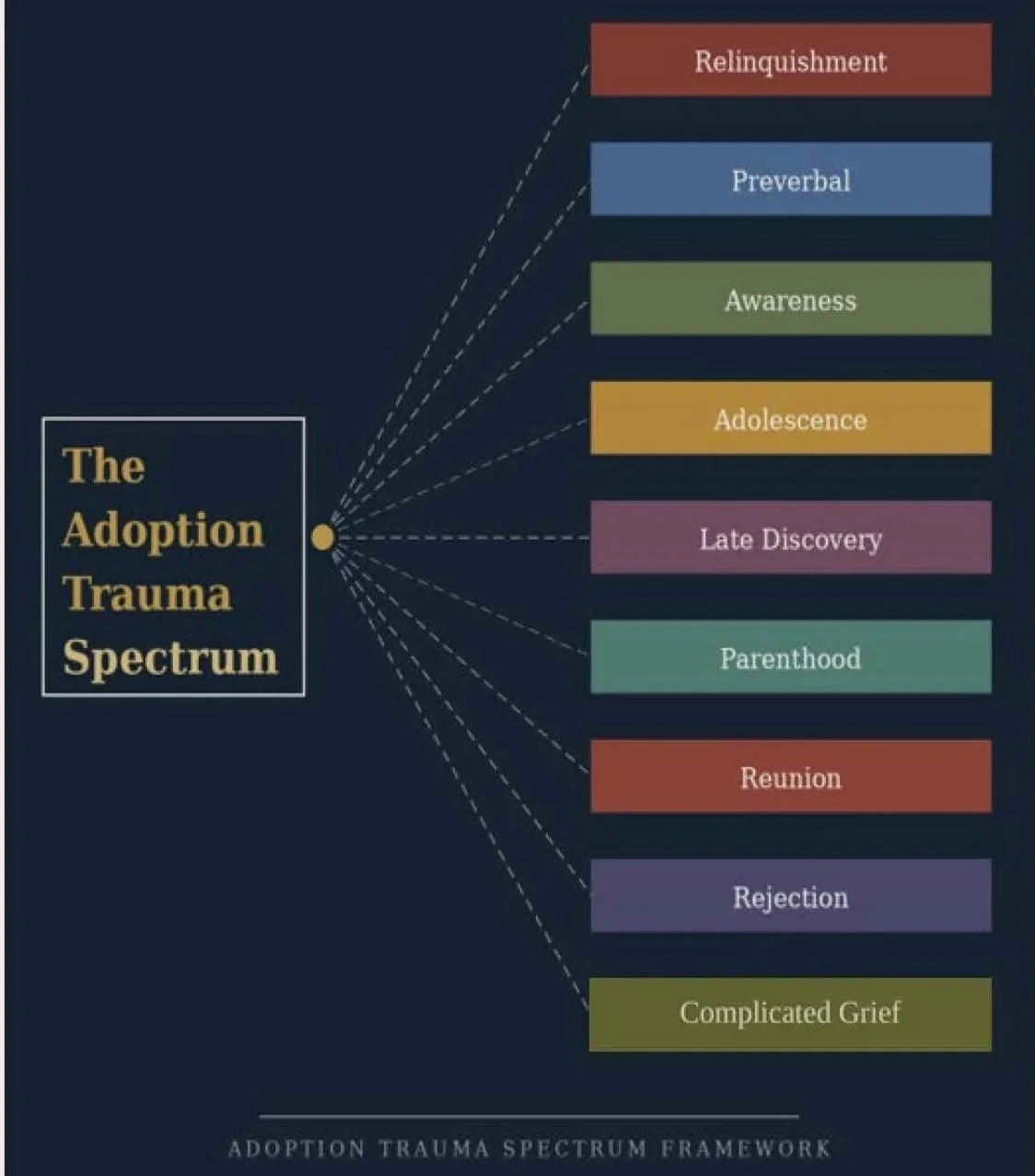
The Spectrum
Relinquishment is traumatic whether it happens at birth or at age 5. It is an imprint that may reactivate at later relational and identity-shaping moments.
Pre-verbal activation is closely linked to relinquishment, but includes interactions between infancy around age 3, and can manifest through somatic symptomatology.
Awareness encompasses the time in which a person begins to recognize themselves as an adopted person.
Adolescence, already notoriously driven by intense brain development, major moments of self-discovery, and emotional dysregulation, this is where we see identity issues emerge.
Late discovery adoptees are those who discover their adoption outside of the early childhood time frame, not just adulthood.
Parenthood and fertility issues affect adoptees too, especially around childbirth.
Reunion is an absolute gauntlet for every person involved, especially with the advent of at-home DNA testing kids, virtually eliminating informed consent.
Rejection occurs when there is a one-sided exit from the reunion process.
Complicated grief, whether facing the loss of birth or adoptive parents through estrangement or death, it is typically not simple.
*Adoptees may move through, revisit, and be re-activated by these points across a life, or they may never experience them at all.
Click here to learn more.