
Adoption Across the Lifespan
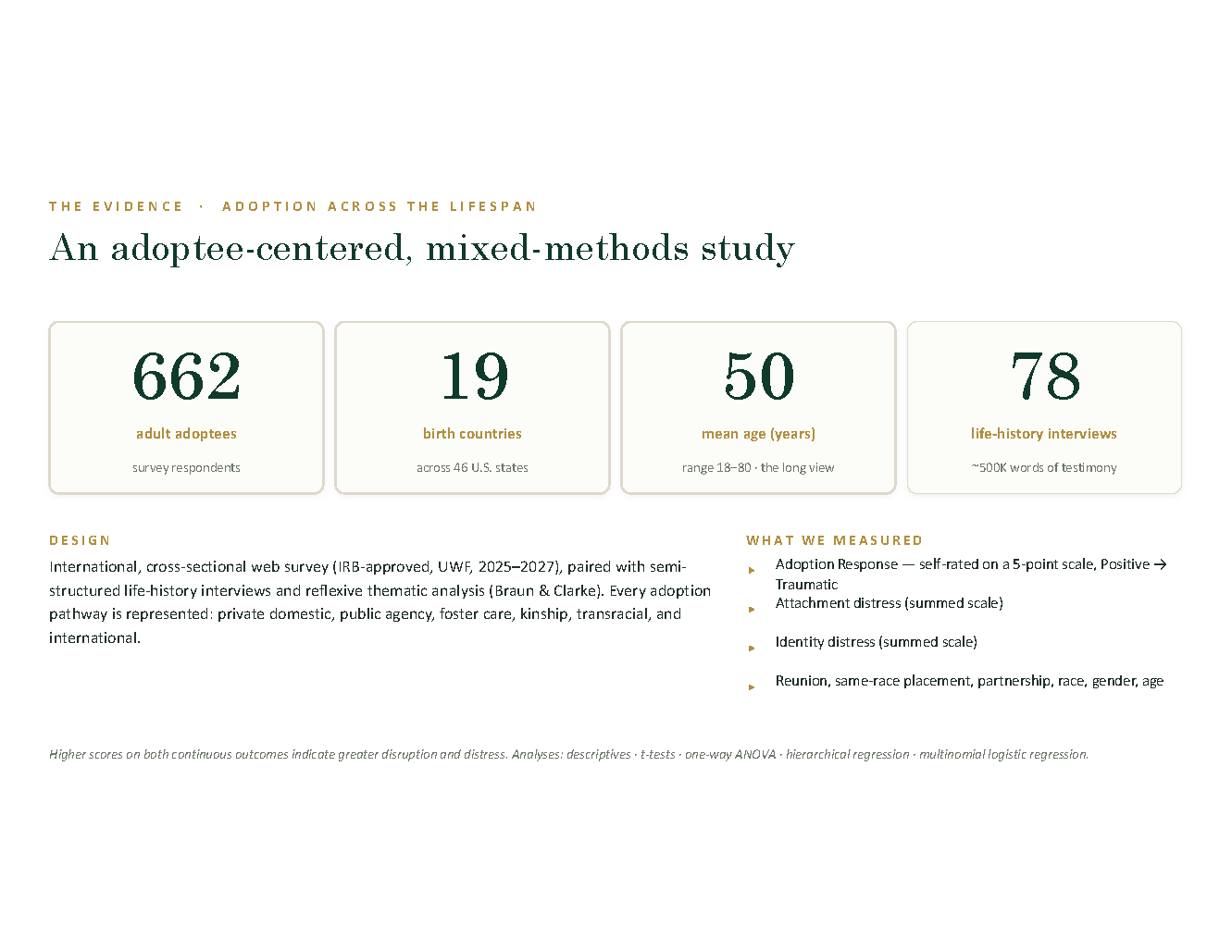
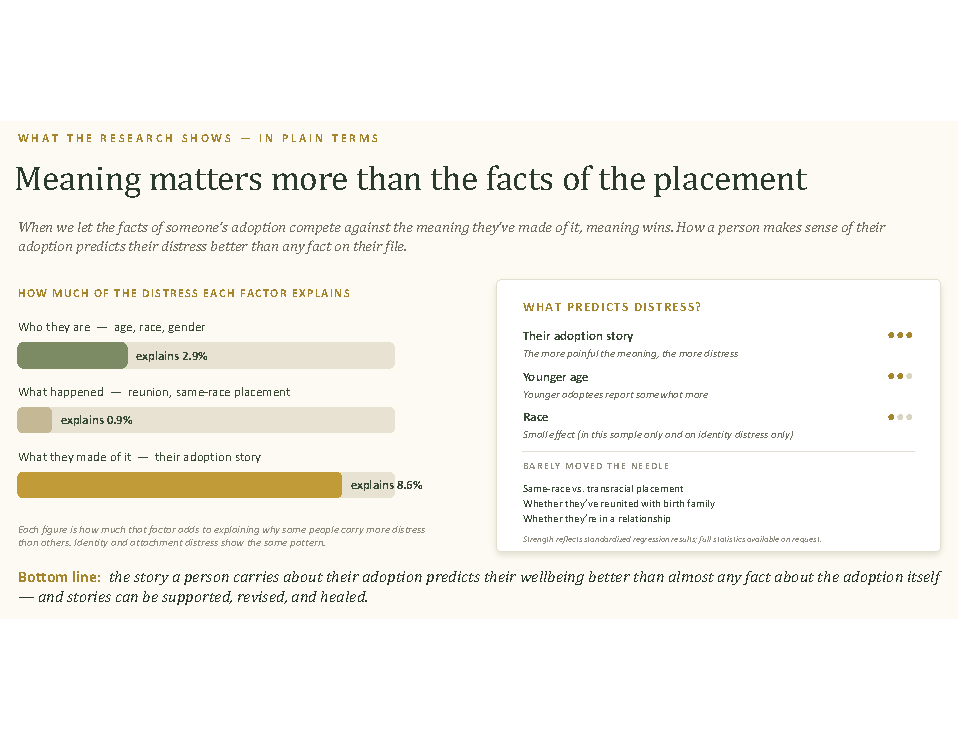
We measured attachment distress and identity distress as separate summed scales, with higher scores indicative of more disruption. And we looked at reunion, same-race placement, partnership, race, gender, and age. Analytically, we ran descriptives, t-tests, one-way ANOVA, hierarchical regression, and multinomial logistic regression.
We paired the quantitative analysis with semi-structured life-history interviews, 88 to date, and are currently analyzing this data using reflexive thematic analysis.
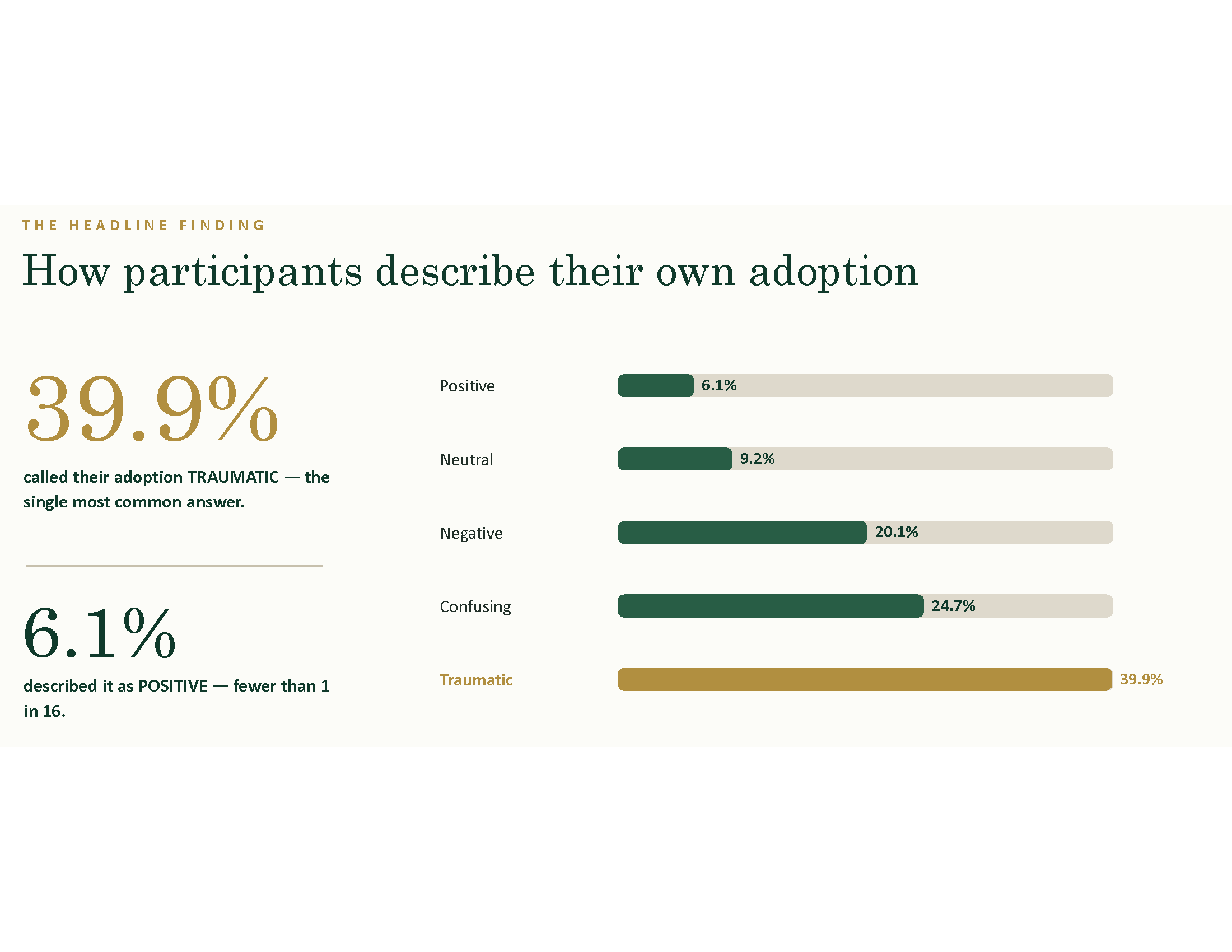
The last question of the survey asked participants to rate their own adoption on a five-point scale — Positive — Neutral — Confusing — Negative — Traumatic.
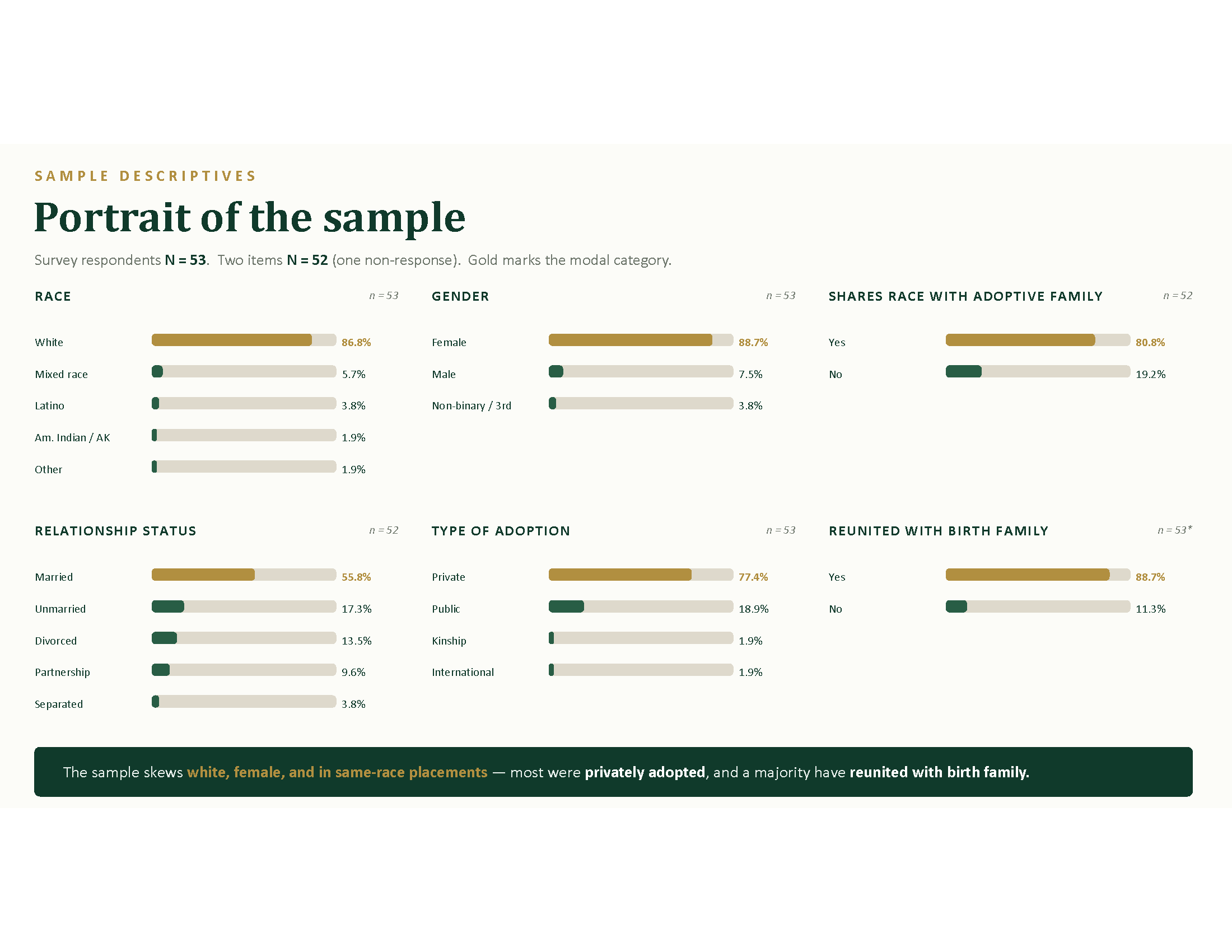
These respondents are adults reflecting back across a life, not children mid-experience. That matters, because it lets us see the parts of the lifespan impacted by adoption trauma that the childhood-focused literature never reaches.
Click here to learn more.